
Email Marketing for Beginners Step-by-Step Guide to Start & Grow
Email marketing is one of the highest ROI digital marketing strategies, especially for beginners who want to build relationships, generate leads, and drive sales. If you’re starting from scratch, this step-by-step guide will help you understand how to start email marketing the right way and turn subscribers into paying customers.
What is Email Marketing?
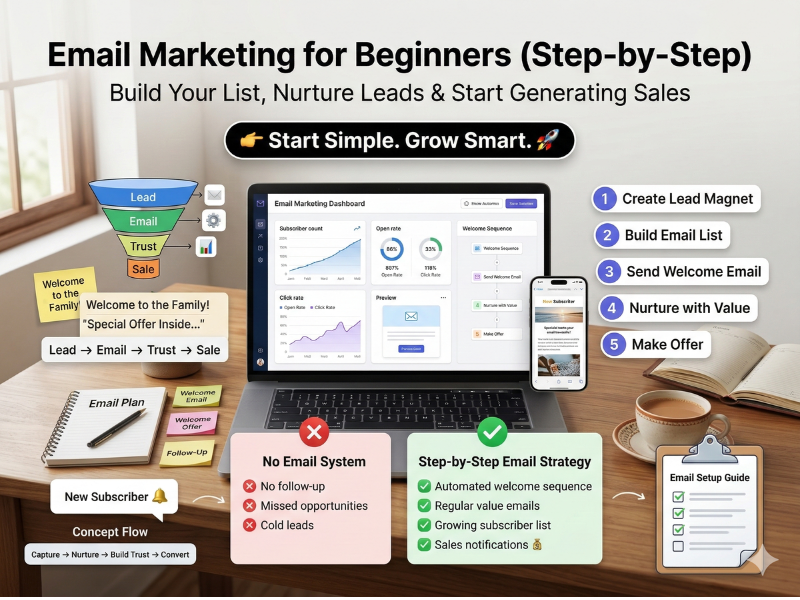
Email marketing is the process of sending emails to your audience to build trust, share value, and promote products or services. Unlike social media, you own your email list, which makes it a powerful long-term asset for any online business.
Step 1: Choose the Right Email Marketing Tool
Before anything else, you need an email marketing platform to manage your list and send emails.
Popular beginner-friendly tools include:
Mailchimp – Easy to use with a free plan
ConvertKit – Great for creators & automation
Brevo – Budget-friendly with SMS features
👉 Choose a tool that offers automation, templates, and analytics.
Step 2: Build Your Email List (The Right Way)
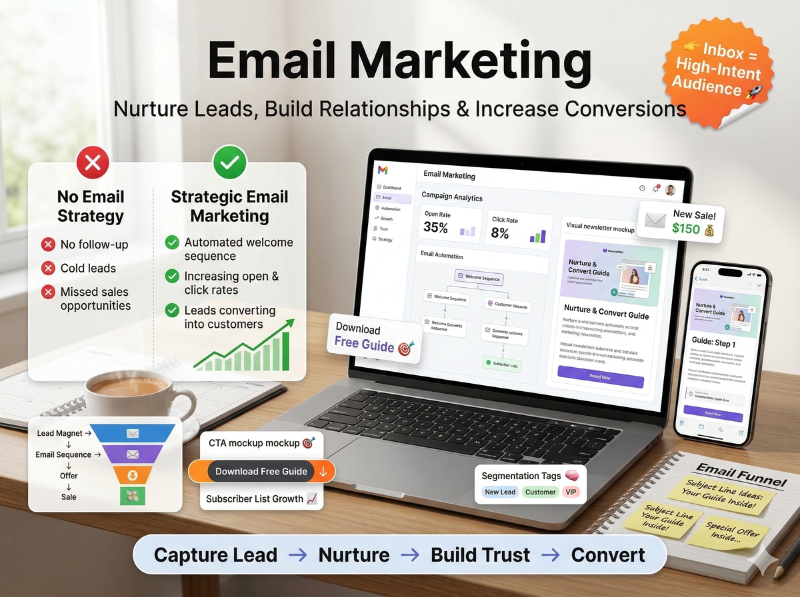
You can’t do email marketing without subscribers. Start by creating a lead magnet—something valuable you offer for free in exchange for email addresses.
Examples:
Free ebook
Checklist
Discount coupon
Webinar or mini-course
👉 Place signup forms on:
Website homepage
Blog posts
Landing pages
Social media bio
Step 3: Set Up a Welcome Email Sequence
First impressions matter. When someone subscribes, send a welcome email sequence to introduce yourself and build trust.
Basic structure:
Welcome + free gift delivery
Your story & brand value
Helpful content or tips
Soft promotion or offer
👉 This builds engagement and connection from day one.
Step 4: Write High-Converting Emails
Your emails should be valuable, engaging, and action-driven.
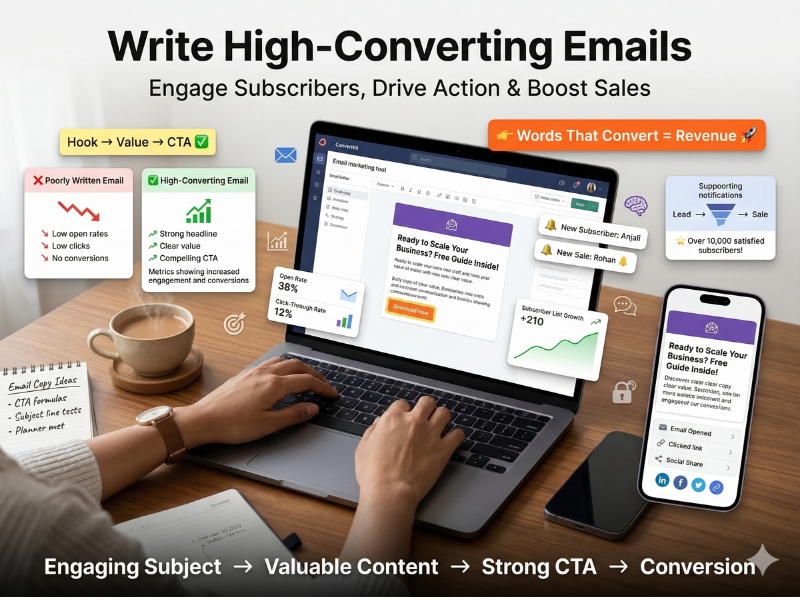
Key elements of a good email:
Subject line → Catch attention
Opening → Hook the reader
Content → Provide value (tips, insights, stories)
CTA (Call to Action) → Tell them what to do next
💡 Keep emails simple, conversational, and focused on solving problems.
Step 5: Use Email Automation
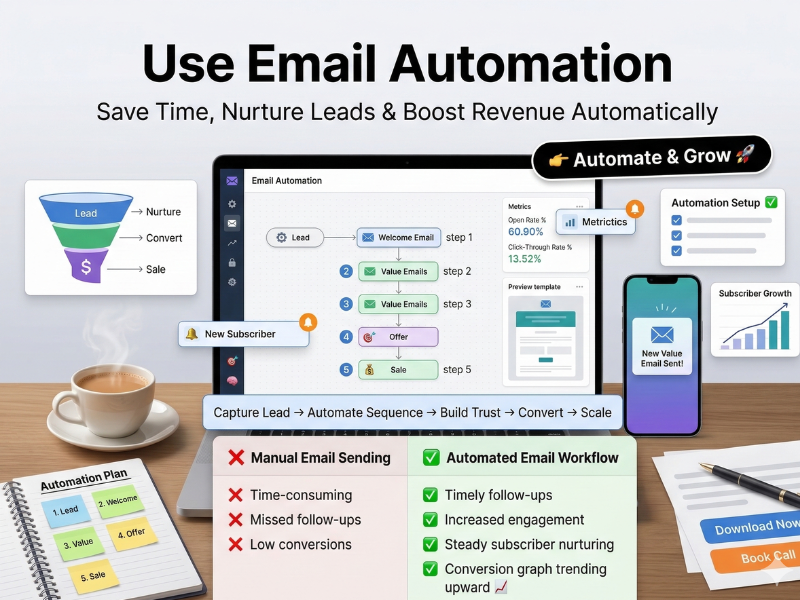
Automation helps you send emails automatically based on user actions.
Examples:
Welcome sequence
Abandoned cart emails
Follow-up emails
Sales funnel emails
👉 Automation saves time and increases conversions without manual effort.
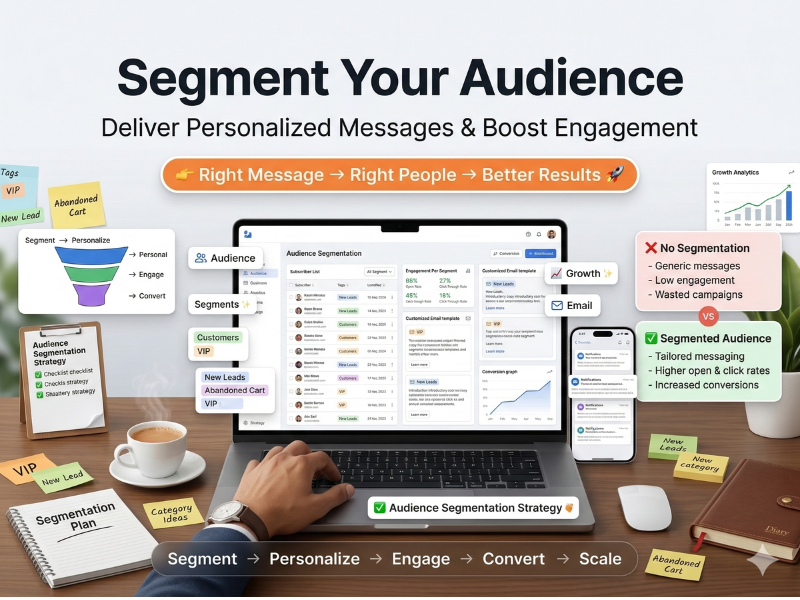
Step 6: Segment Your Audience
Not all subscribers are the same. Segment your list based on:
Interests
Behavior
Purchase history
This allows you to send personalized emails, which improve open rates and sales.
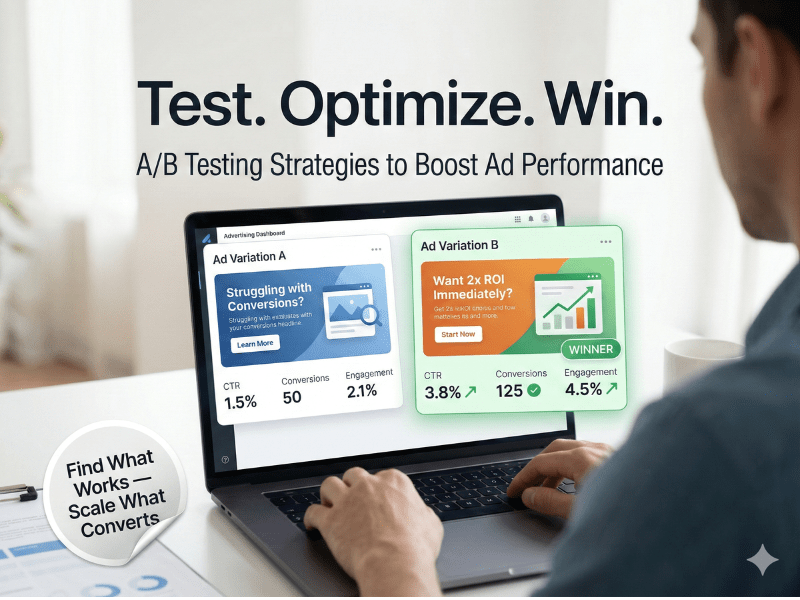
Step 7: Track & Optimize Performance
Monitor key metrics:
Open rate
Click-through rate (CTR)
Conversion rate
👉 Test different:
Subject lines
Email formats
CTA placements
Optimization is the key to scaling your results.
Common Beginner Mistakes to Avoid
Sending too many emails
Not providing value
Ignoring mobile optimization
Not using automation
Buying email lists (NEVER do this)
Why Email Marketing is Powerful for Beginners
Low cost, high return
Direct communication with audience
Builds long-term relationships
Works for any niche or business
FAQ
Yes, it's one of the easiest and most cost-effective ways to start online marketing.
Start with 1–2 emails per week and stay consistent.
Not mandatory, but having a landing page improves conversions.
Turn Subscribers into Customers

About Author
Lakshay Yadav
Founder & Growth Strategist | 5+ Years Experience | Targeting Trends
Lakshay Yadav is a results-driven SEO specialist with expertise in on page SEO techniques, meta tags optimization, internal linking SEO, and page speed optimization. He has worked with multiple websites to improve rankings, increase traffic, and boost conversions.
His approach focuses on combining Google ranking factors 2026 with real-world strategies that deliver measurable growth.