
Digital Marketing Basics for Beginners: Your Complete Starter Guide
If you’re just stepping into the online world, understanding digital marketing basics for beginners is the first step toward building a successful brand or business. Whether you want to grow on social media, run ads, or start an online business, learning digital marketing basics for beginners will give you the foundation you need to succeed in today’s digital-first world.
In this guide, we’ll break everything down in a simple, easy-to-understand way—no jargon, no confusion.
In this guide, you’ll discover proven, actionable amazon product listing optimization tips designed specifically for serious sellers who want measurable growth.
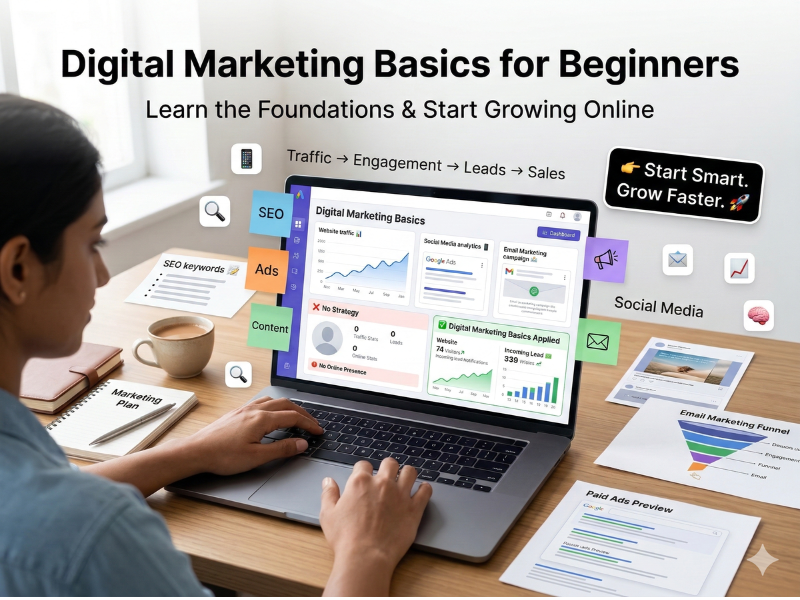
What is Digital Marketing and Why It Matters
Digital marketing simply means promoting products or services using the internet. Instead of traditional methods like newspapers or TV ads, businesses now use platforms like Google, Instagram, and email.
Why is it important?
People spend hours online every day
Businesses reach targeted audiences faster
It’s cost-effective compared to offline marketing
Results are measurable
That’s why learning digital marketing basics for beginners is essential if you want to grow in today’s competitive market.
Core Components of Digital Marketing Basics for Beginners
To truly understand digital marketing basics for beginners, you need to learn the main pillars of online marketing.
1. Search Engine Optimization (SEO)
SEO helps your website rank on Google.
Example:
If someone searches “best shoes in India,” SEO helps your website appear in results.
Beginner Tips:
Use relevant keywords
Write helpful content
Optimize titles and descriptions
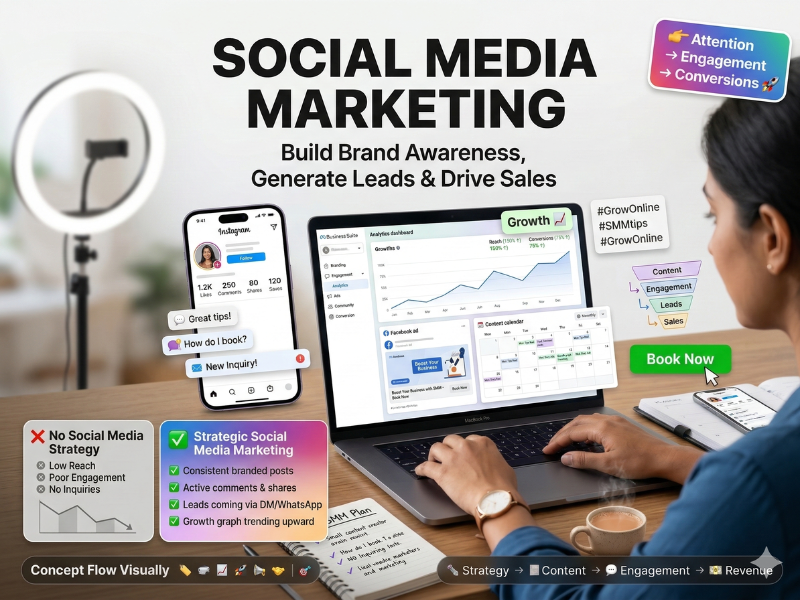
2. Social Media Marketing
This involves promoting your brand on platforms like Instagram, Facebook, and LinkedIn.
Why it matters:
Builds brand awareness
Engages directly with your audience
Drives traffic
Tip: Post consistently and focus on value, not just selling.
3. Google Ads (PPC)
Pay-Per-Click (PPC) ads allow you to run paid campaigns on Google.
Example:
You search “buy phone online” → top results are ads.
Beginner Tips:
Start with a small budget
Target specific keywords
Track performance

4. Content Marketing
Content is the backbone of digital marketing.
This includes:
Blogs
Videos
Reels
Infographics
Goal: Educate, inform, and build trust.
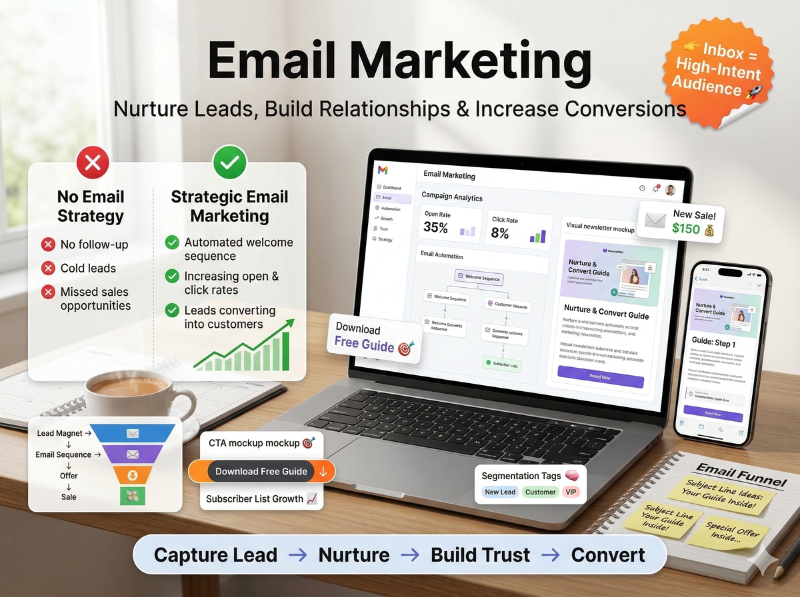
5. Email Marketing
Email helps you stay connected with your audience.
Example:
Sending offers
Newsletters
Product updates
Tip: Always provide value, not spam.
Step-by-Step Roadmap to Get Started
If you’re serious about learning digital marketing basics for beginners, follow this simple roadmap:
Step 1: The Fundamentals
Start with SEO, social media, and content marketing.
Step 2: Choose One Platform
Focus on one channel (e.g., Instagram or Google).
Step 3: Create Content
Post consistently—blogs, reels, or videos.
Step 4: Build an Audience
Engage, reply to comments, and provide value.
Step 5: Run Small Ads
Test Google Ads or social media ads.
Step 6: Analyze & Improve
Use analytics tools to track performance.
Common Mistakes Beginners Should Avoid
While learning digital marketing basics for beginners, avoid these common mistakes:
Trying everything at once
Ignoring consistency
Not tracking results
Focusing only on sales
Copying others without strategy
Pro Tip: Focus on learning + testing + improving.
FAQ
It includes SEO, social media marketing, content creation, Google Ads, and email marketing.
You can learn basics in 1–3 months with consistent practice.
Yes, anyone can start by learning and applying simple strategies step by step.
Ready to scale your Amazon business?
👉 Optimize Your Amazon Listings Now
Final Thoughts
Mastering digital marketing basics for beginners doesn’t require technical expertise—it requires consistency, learning, and action. Start small, focus on one strategy, and build step by step.
The digital world is full of opportunities. The sooner you start, the faster you grow.

About Author
Lakshay Yadav
Founder & Growth Strategist | 5+ Years Experience | Targeting Trends
Lakshay Yadav is a results-driven SEO specialist with expertise in on page SEO techniques, meta tags optimization, internal linking SEO, and page speed optimization. He has worked with multiple websites to improve rankings, increase traffic, and boost conversions.
His approach focuses on combining Google ranking factors 2026 with real-world strategies that deliver measurable growth.